NEW PAGE (shows where the Camino Real crosses modern roads): https://vivabaja.com/ecr-crossings/
See the exact location of the mission road on Google Earth, accurately confirmed via ‘ground-proofing’ at http://caminorealbaja.com/
Finding El Camino Real in Baja EL CAMINO REAL in Baja, Part 1
“El Camino Real” means The Royal Road or as Harry Crosby calls it “The King’s Highway”. There actually are many Camino Reals in the New World, built after the Spanish conquered most of the Western Hemisphere.
The purpose was to connect important points and population centers in the new territories. Gold and other treasures, including tax revenues, were transported back to the king, in part on the various “Royal Roads”.
In California, we are most familiar with El Camino Real as the route Franciscan padre Junipero Serra traveled when he established a chain of missions here, beginning in 1769. Today, four-lane paved expressways bear the name El Camino Real wherever the new street was built on or near the old trail.
Junipero Serra and the El Camino Real both began not in San Diego, but 700 miles further south, in LORETO.
In fact, long before Serra and his Franciscan brothers came to Baja California, the chain of missions and the connecting Camino Real were well established by the Jesuit Order (Society of Jesus) of the Catholic Church, starting in 1697!
After the end of the mission period in Baja, much of the Camino Real continued to be the main route of transportation until the automobile arrived on the scene.
Highway 1, from El Rosario to Tijuana is built on or very near the original trail with only a couple of exceptions.
Three modern travel writers have documented the El Camino Real to help us find the old trail as it winds through Baja. Unlike Alta California, almost no signs or paved roads show the route in Baja from Loreto to El Rosario.
The first modern travel account was written by Arthur North, in 1905, named Camp and Camino in Lower California . North is considered to be the first “tourist” to travel the length of Baja for adventure and research.
The next detailed account is an unpublished report (with maps) by Howard Gulick in 1955. Gulick was researching Baja for his future Lower California Guidebook . He noted the location of older trails he saw crossing the newer auto dirt roads both from the ground and from aerial photos he was privileged to take. Gulick and co-author Peter Gerhard rode with mules on sections of El Camino Real, as well.
The unpublished report and personal conversations with Gulick was of great assistance to the third author, Harry Crosby in his research for The King’s Highway in Baja California , published in 1974. Crosby traveled the entire route of the old trail by mule with local guides. His book contains many photos and maps of the entire Camino Real.
>From the above named authors, I will attempt to provide you with details of the location of El Camino Real in the following installments. Have your 2003 edition Baja Almanac or 2021-24 Benchmark Baja Atlas handy. The 2021+ Benchmark Baja California Road & Recreation Atlas includes the Camino Real trails from Loreto to El Rosario. On Google Earth, see these routes as researched and traveled by www.caminorealbaja.com
EL CAMINO REAL in Baja, Part 2, Loreto to Comondú
2003 Baja Almanac Page 42, Benchmark Atlas Page 56-57:
>From the first California mission of LORETO to the second, Mision San Francisco Javier, the mission trail utilized the canyon of LAS PARRAS to the first site of Mision San Javier which today is called RANCHO VIEJO. The modern auto road is built in the same canyon.
One tenth of a mile west of RANCHO VIEJO the Camino Real splits. To the left (south) goes the trail to SAN JAVIER (5.5 mi.). To the right (west) the Camino Real heads for Comondú and beyond.
On the Camino Real, 1.0 mi. from RANCHO VIEJO the old trail is joined by the Comondú auto road coming from the Loreto-San Javier road (junction at 1.0 mi. past Rancho Viejo).
2.2 mi. from Rancho Viejo another trail joins in from the south. This was the direct Camino Real from San Javier to Comondú, branching from the Loreto-San Javier trail at EL HORNO (Los Hornoso in the Almanac). This small triangle of trails shows the Jesuits built many roads to offer direct routes, much like modern highways.
4.0 miles from Rancho Viejo, the Camino Real turns left from the Comondú auto road and follows ARROYO SANTA ISABEL.
Baja Almanac Page 41:
EL PALMARITO is just south of the Camino Real which goes to a visita (visiting station) of San Javier known as Santa Rosalia (renamed Santa Roasalillita). A stone chapel ruin remained in 1955. Santa Rosalillita is not shown in the Almanac, but the Camino Real is. The old trail goes westerly for about 5 miles from the edge of the map (just above El Palmarito), then turns almost to the north and goes to QUIÑÍ.
The original Camino Real continued north from Quiñí to San Miguel Comondú (reaches top of Almanac page 41 at letter O, crosses the extreme lower left corner of Almanac page 40, and reaches SAN MIGUEL COMONDU, on map page 39.
When the newer mission of SAN JOSE COMONDU was moved to just north of San Miguel, the Camino Real was re-aligned at Quiñí to go more directly to San Jose Comondú passing between CERRO CAPI and CERRO COLORADO, on Almanac page 40.
EL CAMINO REAL in Baja, Part 3, Comondú to La Purísima
Baja Almanac page 39, Benchmark page 56:
The original Jesuit Camino Real left the Comondú valley at SAN MIGUEL (de Comondú). However, after that mission was closed in 1737 and moved to/absorbed by the relocated SAN JOSE de COMONDU (just two miles away), the “King’s Highway” was also moved.
>From SAN JOSE COMONDU the trail first went to EL PABELLON and a modern graded dirt road was built on or near the mission trail in this section.
>From EL PABELLON, the Camino Real is shown partly in the Baja Almanac going directly towards LA PURISIMA.
The trail passes just south of a peak named CERRO JESUS DEL MONTE. Jesus del Monte was an important point on the old trail because of a large tinaja (water hole) about 20 feet by 60 feet in size. This spot became a visita of the mission at Comondú and a cut stone chapel was still visible and photographed by Crosby, 30 years ago.
The name ‘Jesus del Monte’ was derived form a natural formation on a near-by volcanic cinder cone that resembled Jesus and the cross to early travelers.
The next point on the old trail is EL RENEGADO then the trail passes along the east side of CERRO TEZONTLE, a mountain once mined for porous building stone that was highly esteemed.
The next place name on the original Baja road was a little oasis called SAN VICENTE.
When Harry Crosby arrived at Rancho San Vicente he was made welcome by Maximiliano Arce and presented with fruit from Arce’s orchard. One fruit that was interesting was the ‘limon real’ (royal lemon), a pear shaped citrus that appeared to be a hybrid of lemon and grapefruit.
>From San Vicente the Camino Real continued to LA PURISIMA and dropped into that valley via switchbacks, that can still be seen.
EL CAMINO REAL in Baja, Part 4, La Purísima to Guadalupe
Baja Almanac page 39, Benchmark page 54-55:
The Camino Real leaves La Purisima to the north, climbing directly out of the canyon and crosses MESA LAS MESAS then descends in ARROYO PURISIMA VIEJA. The old trail was badly eroded when Crosby travel here, 30 years ago. But, it can be seen where it joins the Paso Hondo automobile road about 7 miles northwest from San Isidro.
PURISIMA VIEJA was the original site of the mission La Purisima Concepcion. The Jesuits tried to locate their missions close to Indian villages (‘rancherias’), but often the water source, which was enough for drinking, was not large enough for also growing crops, so a new site was established.
PASO HONDO and SAN JOSE DE GUAJADEMI (San Jose de los Arces) is on the Camino Real. At San Jose, the trail has a major junction.
The oldest route went right (northeast) directly for Mulegé, near the gulf. In the 1760’s, most travelers used a new route that took the Camino real northwest along ARROYO AGUA VERDE and headed for the mission of Guadalupe, in the mountains.
Baja Almanac page 36:
Some of El Camino Real is shown starting at the bottom of the map by 112°15′ longitude (between I & J). ARROYO LAS CHIVAS is reached and where the Camino Real continues north, another trail (traveled by Crosby) makes a slight detour and goes to EL REPARITO, LAS CHIVAS, EL TULE, LA VINORAMA and rejoins the old camino at SAN MARTIN.
The next section goes over a ridge to ARROYO SAN RAYMUNDO then upstream to SAN MIGUEL, a major visita of Mission Guadalupe. Ruins are still visible at San Miguel.
SAN ESTANISLAO and SAN JUAN are along El Camino Real as it continues northward, finally arriving at MISION GUADALUPE (1720-1795).
>From the diary of Fr. Junipero Serra, 1769
On the Camino Real, between La Purisima and Guadalupe, Serra had an interesting encounter…
“I met there with about ten Indian families: men, women, boys and girls. When I asked them what they were doing there, they answered, with much sorrow, that they belonged to the Guadalupe Mission, not to any particular rancheria, but to the principal village, and that the Father, for lack of food, had been forced to send them to the mountains to look for food, and that, not being used to that way of life, they had no success.”
“They suffered very much, especially at seeing their babies starve and hearing them cry…”
Serra provided relief with his supply of ground corn from which he prepared ‘atole’. He then instructed the families to return to Guadalupe, as he was aware a supply ship had arrived at Mulegé for Mission Guadalupe’s needs.
They thanked the good Father by singing a hymn about the love of God, Serra found very touching.
EL CAMINO REAL in Baja, Part 5, Guadalupe to San Ignacio
Baja Almanac pages 36, 33, 32, Benchmark pages 50-51 & 54:
>From the mission of Guadalupe, the Camino Real heads north over a cuesta (grade) and drops into ARROYO SAN SEBASTIAN (go to Map 33).
SAN SEBASTIAN (shown west of its true location) is/was on the Camino Real where Arroyo San Sebastian joins ARROYO BOCA DE MAGDALENA. Here, the old trail turns west and follows the new arroyo upstream (go to Map 32).
Rancho EL GATO is on the old trail where it turns to the northwest and heads to the grade known as Cuesta de San Venancio. Named by Padre Lizasoain in 1762, its summit is 3,500 feet high and offers the most ‘magnificent view’, per Harry Crosby. The Jesuit road was heavily overgrown, but offered the best preserved switchback grade of the entire El Camino Real, Harry writes. A newer trail is seen going north to EL RINCON (shown in the Almanac).
LA HIGUERA and LA CANDELARIA are the next two ranchos on the old trail, the second operated by the Villavicencio brothers (Anastasio, Juan and Francisco) when Crosby rode here.
The Camino Real climbs another cuesta and drops into ARROYO SANTA CRUZ, following it northwest to SAN LUIS and on to SAN IGNACIO.
EL CAMINO REAL in Baja, Part 6, San Ignacio to Santa Gertrudis
Baja Almanac pages 32, 29, 28, 25, Benchmark pages 50-51 & 47:
Two major routes were used as El Camino Real north from San Ignacio. One kept to the Pacific side of the Sierra San Francisco and the other, on the gulf side. Perhaps one was used in the hot months and the other in the cooler months. Or, it depended on which visita needed a visit?
The Pacific Side Camino Real leaves San Ignacio going slightly west of true north and drops into ARROYO SATANCIO following it up into the mountains… Go to Map 29.
>From just east of 113° longitude, the trail goes north, then off the map at about 27°35′ latitude. NOTE: The auto road shown between Santa Marta and San Francisco de la Sierra does NOT exist, this is a mule trail. Go to Map 28.
Arrive at SAN FRANCISCO DE LA SIERRA, once a visiting station of San Ignacio and perhaps an early choice for the next planned mission to the north (to be called ‘Dolores del Norte’).
Ruins of the old chapel walls were identified as ‘Dolores’ to the first outsiders (Choral Pepper and others with the Erle Stanley Gardner sponsored helicopter expedition of 40 years ago).
>From tiny San Francisco, the Camino Real is shown in the Almanac as it goes west then northwest, finally dropping down into San Pablo Canyon to the visita of SAN PABLO. See photos of San Pablo and the El Camino Real at http://vivabaja.com/missions1/page7.html.
>From the visita, continue down ARROYO SAN PABLO to (just past) the first MESA SAN PABLO, where it climbs to the north and goes straight to SAN CASIMIRO. From there, the Almanac once again shows the ECR as it heads straight north. Go to Map 25…
After crossing the 28° parallel, the ECR curves to the northeast and soon reaches Santa Gertrudis.
The Gulf Side Camino Real is shown in the Almanac leaving San Ignacio straight north, veering east of CERRO SANTIAGO and dropping into ARROYO EL INFIERNO, and follows it upstream. Go to Map 29…
SANTA MARTA was a visita and a resting place for Serra and others on the Camino Real. Continue north into ARROYO EL ROSARITO to the flat plain of SAN GREGORIO. Here Crosby comments on how nowhere had the road (ECR) been so wide, straight, and clearly marked. Go to Map 25…
It is difficult to plot the ECR on the Almanac at the point where it leaves the San Gregorio plain. Many place names used by Crosby are not in the Almanac plus there were several newer detour trails.
One of the El Camino Real routes is shown as a trail in the Almanac. It goes almost to SAN CASIMIRO then turns north to EL CARRIZO, joins with the Pacific Side ECR and reaches Santa Gertrudis.
A far east route goes from ARROYO SAN GREGORIO north through SAN JUAN DE LAS PARRAS, then swings westward and follows ARROYO SANTA GERTRUDIS to the mission.
EL CAMINO REAL in Baja, Part 7, Santa Gertrudis to San Borja
Baja Almanac pages 25, 23, 22, Benchmark pages 46-47:
As in the previous section (San Ignacio to Santa Gertrudis), more than one trail was the Camino Real. This first description will be the route traveled by Serra (probably) and Harry Crosby, known as the ‘Paraiso route’ by Howard Gulick.
The old camino is shown in the Almanac as it goes straight northwest from Santa Gertrudis to RANCHO LA UNION then just west of MESA CALMALLI VIEJO and MESA SANTA CRUZ to RANCHO TRES PALMAS.
The trail from Tres Palmas was sandy as it follows the ARROYO SAN SEBASTION (called Arroyo Tres Palmas by Crosby), but becomes rocky as it climbs up the sierra to RANCHO SAN SEBASTION.
The Camino Real again climbs and goes through a pass just west of San Sebastián then follows the west edge of Arroyo San Sebastián on a mesa where Crosby reports a grand view back to Scammon’s Lagoon.
Now on Almanac page 22:
EL RANCHO is reached, seen on the edge of the map. EL RODEO is the next place mentioned by Crosby and is shown in the Almanac before the (shown) trail reaches the edge of the great canyon of ARROYO PARAISO.
The Camino Real was steep where it dropped off the mesa and required an hour of rock moving by Crosby and company to rebuild washed out portions. They reached the bottom and traveled up the canyon to RANCHO EL PARAISO.
A quarter mile beyond Rancho El Paraiso is the grade to the top of the north side of the canyon. LAS CABRAS then COMPOSTELA are passed as this route of the Camino Real goes north to reach MISION SAN BORJA.
The other routes are known as the ‘Pacific’ and the ‘Golfo Camino’…
The Pacific route stayed out of the high sierra until turning east to pass through the visita of SANTA ANA and on to San Borja.
The Golfo Camino was partly traveled by Arthur North, in 1906. It branches from the Paraiso route near CALMALLI VIEJO, passes CERRO EL VALLE going north-northeast to VALLE LA BOCANA. Along the way was an important tinaja (water hole) called Santa Maria. We visited Tinaja Santa Maria in 2001 and a year and a half later: http://vivabaja.com/1202/.
>From La Bocana, the Golfo Camino travels up VALLE SAN PEDRO and crosses the mountain ridge just south of the 28°40′ line on page 23. Go to page 22…
The water hole EL AGUAJE is passed (see photos of it at http://vivabaja.com/neal/) as is RANCHO SAN GREGORIO (see photos at http://vivabaja.com/401/ on the way to Mission San Borja.
EL CAMINO REAL in Baja, Part 8, San Borja to Calamajué
Baja Almanac pages 21, 20, 18, Benchmark pages 41 & 46:
Mission San Borja is just off the bottom of Map 21 at the 113°45′ line.
Unlike most of the previous sections of the old mission trail, much of the route north of San Borja is near auto. roads. Photos and GPS by Neal Johns and I can help you find parts of this trail, which was the ‘Baja highway’ before automobiles!
Unfortunately, the good road builders (who were the Jesuits) were removed from California by orders of the king not long after pushing north from San Borja. They hadn’t the time to construct the Camino Real to the standards of the southern sections. The Franciscans only did some ‘cargo’ trail building between Mission Santa Maria and Gonzaga Bay as it was necessary for their Alta California project. As a result, most of the Camino Real north of San Borja resembles little more than a cattle trail, today.
>From San Borja the old trail and modern road are basically the same for the first few miles then the ECR passes just west of CERRO COLORADO DE SAN BORJA, whereas the auto road swings more west.
Neal believes he found where it rejoins the auto road, see a photo near the trail of Neal driving ‘through’ a boojum tree! http://vivabaja.com/neal2/
North of the above photo location, the Camino Real turns west to pass through CANON EL JARAZO, then north between ARROYO AGUA AMARGA and ARROYO VERDE and crosses the L.A. Bay highway at the Kilometer 29 Marker.
Highway construction in 1974 obliterated the trail on either side of the new road, but a short hike will reveal it. I found what I believe to be the ECR, to the south at http://vivabaja.com/703.
On the north side of the L.A. Bay highway, the Camino Real turns from north to northwest, at the base of a hill. See my photo at http://vivabaja.com/403/
Now, the Camino Real heads to Tinaja de Yubay, via CAÑADA BENTANCOURT going northwest, and along the east side of MESA LUZ DE MEXICO.
Almanac page 20: Not shown in the Almanac is the famous tinaja (water hole/ pond), it is in ARROYO YUBAY midway between CERRO LA PALMITA and MESA YUBAY (in the canyon indicated by the 700 meter contour line).
The Camino Real travelers had to take a short detour up the Yubay canyon to reach the water. Neal Johns has the GPS for a few points on the old trail, at the bottom of http://vivabaja.com/neal2/. Also, Neal has great photos of Yubay on that page.
Continuing northwest, the El Camino Real follows the base of the SIERRA LA ASAMBLEA, east of EL CRUCERO at Highway One.
Almanac page 18:
Inside CANADA AGUAJITO HIGUERAS was a water source for early travelers. The old trail comes to or crosses the auto road going to CALAMAJUÉ. Here, they are parallel until they enter Calamajué Canyon where they merge, as no other route is possible, in the narrow, water filled canyon.
Where the auto road climbs a steep grade to leave the Calamajué river (heading for Coco’s Corner and Gonzaga), the trail and road to the mission head to the opposite side of the arroyo and up to a terrace overlooking the valley.
EL CAMINO REAL in Baja, Part 9, Calamajué to Santa María
Baja Almanac page 18, Benchmark pages 40-41:
>From the terrace where the short lived mission at Calamajué stood, this final section of the Jesuit trail crossed the broad arroyo and climbed the steep north side, as does the auto road.
Crosby notes seeing signs of the trail just west of the road as they both head north to where passage over the ridge of SIERRA CALAMAJUÉ is possible.
Howard Gulick found the trail in 1952, also to the left (west) of the road and notes that the Camino Real passes the mouth of a canyon called El Culebrado (a snake like winding canyon) before crossing the road at LAS ARRASTRAS and comes to a water hole called San Francisquito, 0.6 mi. past Las Arrastras. Las Arrastras has become the new location of Coco’s Corner (in April 2021).
In 1769, Junipero Serra left Calamajué a little after noon and arrived at ‘San Francisco’ (San Francisquito) that day. In 2025, we found the San Francisco (Francisquito) waterhole site and compared the location with photos from 1959: https://vivabaja.com/pozo-san-francisquito/
The name San Francisquito had been applied to many sites in the region, including the larger part of what most call ‘Gonzaga Bay’: Ensenada de San Francisquito. The Mexican topos and Baja Almanac switched the names of the two halves of ‘Gonzaga Bay’, however.
>From the waterhole (and later an abandoned mining camp) of San Francisquito, the old trail follows the arroyo of San Francisquito, but called ARROYO LAS ARRASTRAS in the Almanac. Crosby notes seeing excellent signs of the Jesuit road higher and on the west side of the arroyo from the auto road.
Both Gulick and Crosby say the Camino Real follows the arroyo to its junction with ARROYO SANTA MARÍA, however recent mule back Camino Real traveler, Baja Bucko, says the trail short cuts to the mouth of the Santa María canyon and passes the palm oasis of Las Palmitas at 29°40.36′, -114°28.33′ (WGS84).
>From Las Palmitas (also spelled: Las Palmytas or Las Palmas) the trail heads for the mouth of Santa María canyon…
Junipero Serra and likely the Jesuits before, went right up the canyon, called ‘El Cajon’ and climbed up the steep north side to enter the valley containing the mission. This trail is now called the ‘Indian Trail’ as the El Camino Real was moved out of the canyon after Serra’s trip to Alta California. The Indian trail is visible in this aerial photograph (bottom photo): http://vivabaja.com/missionsm/.
This ‘El Cajon’ canyon route was so dangerous that a new route was established which stayed out of the canyon, to the north. This was the route traveled on mule by Crosby, Baja Bucko, and Don Jorge.
Photos of the Camino Real where it leaves Arroyo Santa María at 29°41.74′, -114°28.22′ (WGS84) and heads northwest are at: http://vivabaja.com/1102/.
In November, 2003, I traveled further up the Camino Real from the previous year but did not have enough daylight to reach the mission (allow 6 hours). Photos and GPS at: http://vivabaja.com/1103/.
Soon after, in December, 2003, Don Jorge continued on to reach the mission and returned via the Indian Trail and canyon (Arroyo Santa Maria).
EL CAMINO REAL in Baja, Part 10, Santa María to San Fernando
Baja Almanac page 16, Benchmark pages 38-39:
Santa María de los Angeles (located midway between Cataviña and Gonzaga Bay’s Punta Final) was the last mission founded by the Jesuit order, in 1767. They built a chapel from palm logs before being expelled from California by order of the king of Spain. The Franciscans replaced the Jesuits, and built the adobe church and residence structure whose ruins are viewed today. See http://vivabaja.com/missionsm for photos by Neal Johns and Baja Mur.
Franciscan padre, Junipero Serra had a cargo trail constructed from Santa María northeast to Bahia San Luis Gonzaga. Remains of a warehouse built by the padres are still visible: http://vivabaja.com/1102/. At Gonzaga Bay, supplies were off loaded from ships to supply Santa Maria and subsequently the first Franciscan mission in California, San Fernando Velicatá.
Santa Maria was abandoned as a mission in 1769, but continued as a visiting station and rest stop on the El Camino Real.
Baja Almanac page 16, Benchmark page 39:
>From Santa María, the auto road and trail took the same path to the peninsular divide: http://vivabaja.com/403/. There-about, the ECR went more northerly to a water hole known as San Antonio, then northwest to a spring called San Nicolas, located on the upper portion of Arroyo Cataviñacito (the arroyo that crosses Hwy. 1 north of Cataviña, by the pictograph cave).
>From San Nicolas the trail headed west to Agua Dulce, an important spring located just north of Highway 1, about 8 miles east of Rancho Sonora: http://vivabaja.com/1102.
>From Agua Dulce the old trail and the old Transpeninsular dirt road were very near each other, except that the El Camino Real went to the south of Rancho San Agustin (as does Hwy. 1).
It should be noted that the Mexican topo maps (and Baja Almanac) never plotted the new highway correctly and just ‘paved’ the old road (on the map) in the section from near San Agustin to San Roque, page 16. The highway actually parallels the old road, about 1-2 miles to the south and west of it.
The Camino Real parallels ARROYO SAN FERNANDO west from near San Agustin, as does Highway One.
Baja Almanac page 15, Benchmark page 38:
Today’s abandoned Rancho Progreso café is a half mile north of the old Baja road and ECR route, where that rancho used to be. It is then about 3 miles west along Arroyo San Fernando to Mission San Fernando Velicatá.
The next section (to El Rosario) is quite different from the old or new Transpeninsular roads!
Another water source on the old trail…
Among the beautiful photographs from Neal Johns, the bottom one at http://vivabaja.com/neal2/.html showing the oasis in ARROYO AGUAJE GUILLERMO may very well be a place named ‘Agua Escondida’ by Arturo Grosso to Howard Gulick, in the 1950’s.
This ‘Agua Escondida’ was between San Nicolas and Agua Dulce on the Camino Real. Gulick’s 1954 map of the El Camino Real places this spring in the same arroyo where Neal’s photo was taken.
EL CAMINO REAL in Baja, Part 11, San Fernando to Alta California
Baja Almanac page 15, Benchmark page 38:
Mission San Fernando Velicatá was the first Franciscan founded mission in California in 1769 (and the only one in Baja). Junípero Serra found the site to be much more suitable than arid and limited Santa María de los Angeles, the final Jesuit mission (in California).
Junípero Serra’s route north to San Diego bypassed El Rosario (the next mission, founded 5 years later) and instead went north past San Juan de Dios and into the lower foothills of the Sierra San Pedro Mártir not returning to the coastal plain until the San Telmo/ Colonet region of today.
Harry Crosby’s book (GATEWAY TO ALTA CALIFORNIA) is a superior guide to Serra’s exact route from El Rosario to San Diego.
The Camino Real to the next mission (Rosario, founded by the Dominicans in 1774) traveled west from San Fernando.
Where the arroyo bends south at the base of the petroglyph cliff, the old trail went into the small canyon just to the right/north of that cliff and continued west.
The next point on the Camino Real was a water hole called SANTA URSULA. Howard Gulick drove to Santa Ursula in 1953. The road to it is 2.0 miles west of (now gone) Rancho Arenoso, on the old main road. Rancho Arenoso was just south of the highway at Km. 106 (west the the bridge named Arenoso I), the ruins were visible from the pavement for many years. A modern farm has removed the ruins.
Going south to Santa Ursula, 6.9 miles from the old main road, Gulick found an old adobe house, remains of an old dam and an irrigation ditch.
The next water hole was called AGUA AMARGA and is located on ARROYO SAN VICENTE, probably close to the merging with ARROYO LA BURRA. Another water hole called LAS CUEVITAS was beyond Agua Amarga.
The Camino Real turns north up ARROYO EL SAUCE the turns west at about the 30° line of latitude passing the north side of MESA LA SEPULTURA and crosses the Punta San Carlos road just south of Highway One.
A place called SAN ANTONIO was on the old trail. Continue west to the older road going from El Rosario to Punta San Carlos, which was reached about 5 miles southwest from El Rosario. The Camino Real and that auto road took the same route on to El Rosario.
>From El Rosario north to Alta California both Highway One and El Camino Real were mostly parallel and close together. Exceptions would be were the ECR went inland via Mission Santo Domingo and San Telmo de Arriba, staying in the foothills between San Quintin to just north of Colonet. Also, San Vicente to Santo Tomas was partly west of Highway One.
See the Howard Gulick maps of El Camino Real, stitched together.

Enjoy exploring Baja as much as the pioneers of the past and the adventurers of today!
EL CAMINO REAL in Baja, Part 12, Maps
The following three maps were drawn by Howard Gulick in 1954 during his extensive research on the peninsula that was published as the Lower California Guidebook with many editions and printings from 1956 to 1970. These maps and a report on the location of the old mission trail were never published.
Loreto to San Ignacio
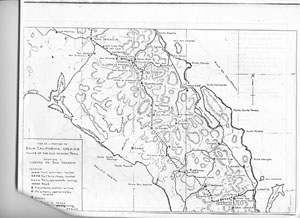
As Loreto was the first California mission, the trail started there and went north…
San Ignacio to San Borja
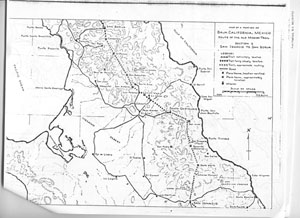
The Jesuits built well and the trail is found most of the way to San Borja…
San Borja to El Rosario

North of San Borja most of the El Camino Real is just an animal trail as the Jesuits were removed from California in 1768. The Franciscans and Dominicans were not the same road builders as were the Jesuits.
More El Camino Real Maps: https://vivabaja.com/hgreal/
Where the Camino Real crosses modern roads: https://vivabaja.com/ecr-crossings/